
There was an old saying:
“Give a busy man the job.”
It sounds logical.
The busy leader focuses quickly.
Cuts through noise.
Delivers to standard.
Deadlines are met. Pressure reduces. The organisation moves.
But what if task efficiency is coming at the cost of systemic effectiveness?
In healthy systems, anticipation, design and implementation are not concentrated — they are distributed.
In other systems, participation narrows.
When deadlines tighten and stakes rise, organisations instinctively reduce risk:
“Let’s not overcomplicate this.”
“He’s already across it.”
“She’ll sort it.”
“We don’t have time to canvas opinion.”
The same few people anticipate.
The same few design.
The same few implement.
It feels responsible.
It is efficient.
And it quietly concentrates accountability.
The strongest leaders rarely begin as firefighters.
They are often excellent anticipators.
Strong designers.
Decisive implementers.
But over time, something shifts.
Instead of embedding anticipation into the system, they personally carry it.
Instead of developing design capability in others, they redesign themselves.
Instead of insisting on distributed implementation accountability, they rescue.
Not to control.
Not to dominate.
But to protect standards and momentum.
They become expert firefighters — highly effective in crisis —
but increasingly pulled away from strategic altitude.
The organisation praises their reliability.
The system becomes dependent on it.
Pressure does not create culture.
It exposes it.
Under pressure, you see:
Where accountability truly sits.
Whether anticipation widens or narrows.
Whether ambiguity is carried — or reclaimed.
Whether design authority is shared — or centralised.
Anticipation, at its best, broadens reference points.
It invites new views.
It challenges certainty.
But when anticipation concentrates in too few hands, risks emerge.
· Certainty replaces exploration “We already know the answer.”
· Speed replaces perspective. “We don’t have time to debate this.”
The aperture narrows.
Reference points shrink.
And the very leaders who once protected the system begin to limit its adaptability — not because they lack capability, but because capability is concentrated.
Nadya Zhexembayeva’s work at the Reinvention Academy highlights a consistent organisational pattern: under pressure, companies tend to double down on their existing strengths rather than deliberately expanding new capabilities.
Execution excellence, optimisation and speed are reinforced — because they are visible and measurable. Meanwhile, anticipation, redesign and distributed accountability require intentional effort and cultural permission.
This pattern is echoed in empirical research. A large-scale study published in the Quarterly Journal of Economics (Benson, Li & Shue, 2019) found that firms systematically promote their strongest current-role performers — even when those individuals later perform worse in management roles.
In other words, execution strength is often mistaken for strategic readiness.
The issue is not incompetence.
It is structural bias toward what is immediately visible and rewarded.
Efficiency solves the task.
Effectiveness strengthens the system.
Efficiency asks:
Who can get this done fastest?
Effectiveness asks:
Where should accountability sit if we want capability to deepen?
If solving today’s problem increases tomorrow’s dependency, efficiency has become expensive.
This is how plateaus form.
Not from lack of effort —
but from concentration of anticipation, design and implementation in too few hands.
The answer is not abdication.
And it is not micro-management.
It is structured openness.
Clear destination.
Clear boundaries.
Clear accountability.
Clear review rhythm.
Within those guardrails, leaders resist the urge to rescue.
They allow capable individuals or groups to carry accountability through ambiguity — and hold them to it.
In practice, momentum often builds quickly when accountability is clearly defined and appropriately distributed. More people think. More people decide. More people act.
Anticipation widens.
Design capability spreads.
Implementation accountability deepens.
Scale and capacity develop together.
If the small group who currently carries anticipation, design and implementation stepped away tomorrow, what happens?
Does the system continue — or stall?
That answer reveals whether you have depth… or concentration.
These patterns rarely correct themselves.
They require deliberate redesign of how accountability, authority and ambiguity are distributed inside the culture — especially under pressure.
At Aruka, we work with founders and leadership teams to restore strategic altitude while embedding capability more broadly — so performance does not rely on heroic efficiency.
If this tension feels familiar in your organisation, it’s worth addressing before fatigue or plateau forces the issue.
#Leadership #OrganizationalCulture #Strategy #LeadershipDevelopment #BusinessGrowth
📷 StockCake
Let’s talk about a number that should both terrify and energise anyone in business:
💡 85% of current business models will be obsolete within five years.
(Gartner Future of Business Survey — as shared by Dr Nadya Zhexembayeva, The Reinvention Academy)

Recently, Dr Zhexembayeva highlighted findings from Gartner’s Future of Business Survey that every leader should pay attention to.
Her synthesis of the data reveals how rapidly the ground is shifting beneath our organisations — and why continuous reinvention is no longer optional.
(as outlined by Dr Nadya Zhexembayeva from the Gartner Future of Business Survey)
1. The innovation gap is accelerating.
Gartner reports that 63% of leaders say their innovation timelines are shrinking, while customer expectations and technology continue to advance faster than most companies can adapt.
For small and mid-sized enterprises, this gap is especially dangerous — operational focus often crowds out future-readiness, leaving teams reactive instead of creative.
2. AI is rewriting what “value” means.
According to McKinsey, over 50% of professional-services tasks will be automated by 2027.
If your model defines value purely by efficiency or output, that advantage will soon disappear.
Future-fit businesses are already blending human insight, digital capability, and authenticity to create value that technology can enhance but never replace.
3. Most strategies are reactive, not adaptive.
Drawing again from the Gartner Future of Business Survey, more than 70% of leaders admit they’re trapped in outdated planning cycles — responding to change instead of anticipating it.
The result? Decision fatigue, margin pressure, and cultures stuck between “how we’ve always done it” and “what we know we should be doing.”
It means even the most successful business model has a shelf life.
Disruption is no longer an external threat — it’s your daily operating system.
If left unchanged, today’s model will almost certainly expire.
But here’s the opportunity: the organisations that thrive in this new landscape aren’t necessarily the biggest or fastest — they’re the ones that learn to reinvent continuously.
Reinvention isn’t about scrapping everything and starting over.
It’s about building a system for ongoing evolution — one that allows you to adapt without burnout, client loss, or cultural drift.
At Aruka Solutions, we’ve built this principle into the Aruka Reinvention Framework — a structured yet flexible guide that helps SMEs and leadership teams evolve their business model, operations, and culture in rhythm with market change.
Rather than a one-size-fits-all system, it provides a clear process through which bespoke, client-specific solutions can emerge — ensuring each business reinvents in a way that’s both authentic and sustainable.
In a world where products, platforms, and even industries can transform overnight, the ability to reinvent intelligently and repeatedly is what separates resilience from irrelevance.
Reinvention is not a one-time event — it’s the discipline of staying alive, aligned, and adaptable.
If your business model hasn’t evolved in the past 24 months, it’s time to ask:
“Are we still relevant — or just familiar?”
That’s where reinvention begins.
📈 Explore how the Aruka Reinvention Framework can help your business evolve with clarity, confidence, and purpose.
Visit www.arukasolutions.co.za or reach out directly to start a reinvention conversation.
Sources:
Gartner Future of Business Survey, 2024 – as highlighted by Dr Nadya Zhexembayeva, The Reinvention Academy
McKinsey Global Institute, The State of AI and Automation, 2024
📷 = Stockcake

Richard Blake had built ThriveWorks from scratch — a business born from purpose.
He wanted to help companies grow through technology that made people’s work simpler, more human, more connected.
But somewhere along the way, that light dimmed.
Deadlines replaced dreams.
KPIs replaced conversations.
And the company that once pulsed with purpose began to run like a well-oiled machine… only without the heartbeat.
Richard still cared deeply about his business — but increasingly, it felt transactional.
He noticed his patience wearing thin with the team. Targets weren’t being met fast enough, ideas felt flat, and his once-constructive feedback had taken on a sharper edge.
Yet beneath the frustration was something quieter — and more confronting.
Through coaching, he began to see that what he was really angry at… was himself.
Somewhere along the way, he’d sold out on his purpose.
What began as a mission to make work more meaningful had become a chase for margins and monthly turnover.
Each financial milestone gave him a momentary rush — followed by a hollow sense that none of it truly mattered.
It wasn’t greed. It was drift.
He’d simply lost sight of the reason he began.
It didn’t happen overnight.
The business had grown, targets had expanded, and the early days of “let’s make something meaningful” were replaced by “let’s make it work.”
At first, it seemed like maturity.
But over time, Richard noticed the telltale signs:
People were busy but uninspired.
The values on the wall no longer matched what was lived in meetings.
Once-creative minds were now careful minds — afraid to take risks or question direction.
Collaboration was thinning; conversations were shorter, sharper, and more transactional.
The team was working hard — but not together.
Patrick Lencioni once wrote that when trust breaks down, everything else soon follows. Richard could see it: not outright conflict, but a quiet erosion of belief.
People still performed… just without heart.
Through coaching, Richard began to trace the arc of ThriveWorks’ journey — from purpose-driven to performance-obsessed.
What began as a desire to serve clients had become a need to please them.
What started as a mission to solve problems had become a habit of chasing profit.
As Nikos Mourkogiannis reminds us in Purpose: The Starting Point of Great Companies, true purpose isn’t a slogan — it’s the energy that animates performance.
When purpose fades, performance becomes a treadmill: exhausting, measurable, and ultimately hollow.
Even Richard’s best people were showing signs of fatigue. They didn’t know why they were doing what they were doing anymore — only that it needed to be done.
And that’s the quiet cost of chasing performance: you might hit every target and still feel empty.
Brené Brown speaks of “armoured leadership” — when fear replaces curiosity and vulnerability disappears.
That armour had crept into ThriveWorks’ culture.
People guarded their ideas, deferred to authority, and stopped naming the tensions that needed to be surfaced.
The once-magnetic sense of belonging had thinned to polite professionalism.
When a business forgets its purpose, it loses more than clarity — it loses its soul.
It becomes a financial vehicle, not a living organism.
And without soul, no culture — however cleverly branded — can attract or retain the kind of people who build something extraordinary.
Richard’s turning point didn’t come from a new strategy or off-site.
It came from a question:
“What if we stopped trying to grow, and started trying to matter again?”
Through coaching, he began to restore ThriveWorks’ original purpose — what Simon Sinek would call its “why.”
That simple but profound question — why do we exist? — had once been obvious.
Now, it had to be reclaimed.
Conversations shifted from targets to truths.
Team meetings began exploring what success feels like, not just what it measures.
People started remembering why they joined — and some, for the first time in years, found language for what they had lost.
Restoring purpose wasn’t about slowing down; it was about realigning energy.
As the team restored their shared sense of meaning, performance began to follow — not as the goal, but as the fruit.
If your team feels weary, divided, or transactional — these are not the final signs of decline.
They are warning lights on the dashboard.
Signals that it’s time to turn back toward purpose.
Because when purpose is restored, performance finds its rightful place again — not as the master, but as the measure of meaning.
At Aruka, we help leaders like Richard restore what made their business worth building in the first place.
One of the simplest ways to begin is by holding up a mirror — our Aruka Essentials Team Scan™ helps teams see where purpose has been replaced by pressure, and what it will take to bring alignment, trust, and energy back to life.
👉 Learn more about the Aruka Essentials Team Scan™ here.
It’s courageous work. But it’s the only kind that lasts.
Also available on: www.arukasolutions.co.za

Richard Blake had a nagging sense something was off.
On paper, his company was steady — the team was busy, deadlines were met, and clients were served. But as he walked the corridors, he couldn’t shake the thought: “Everyone’s working hard… so why does it feel like the energy isn’t translating into real progress?”
His coach suggested a simple step: hold up a mirror. Not just to himself, but to the whole leadership team. That mirror came in the form of the Aruka Performance Pulse™ — a quick, practical survey designed to surface what leaders often sense but struggle to prove.
Richard hesitated. What if the survey confirmed his worst fears? What if the problem wasn’t the team, but him?
And yet, the results were both sobering and freeing.
The survey drew on the now-classic insights from Patrick Lencioni’s The Five Dysfunctions of a Team. We honour Lencioni’s work as one of the most enduring frameworks in team performance — and while he offers his own assessment, we’ve integrated these dysfunctions into the Aruka tool in a way that links directly to the restoration process we guide teams through.
The five dysfunctions are simple, but they cut deep:
Absence of Trust
Fear of Conflict
Lack of Commitment
Avoidance of Accountability
Inattention to Results
Richard’s team rated themselves across each of these areas. It wasn’t theory anymore — it was a snapshot of reality.
For Richard, the findings were confronting:
Trust was conditional, which left gaps. Team members were guarded, willing to share success but not struggle.
Conflict was present, but avoided under the guise of “professionalism.” The silence spoke louder than the words left unsaid.
Commitment was evident, but confused by shifting priorities that changed too often without clarity.
Accountability had become a solo sport — played mostly by Richard while others watched from the sidelines.
Results were celebrated behind departmental doors, rather than owned and enjoyed by the team as a whole.
It was as if the team was rowing — but out of sync. In rowing, it isn’t about more energy; it’s about rhythm. Rowers sit one behind the other, oars on alternating sides. What matters isn’t uniformity, but timing — equal commitment, mutual trust, and the humility to follow the team’s rhythm over individual power. One person surging ahead or holding back throws the whole boat off balance.
The survey wasn’t the end. It was the starting line. Richard and his coach began working with the team to:
Rebuild psychological safety so people could admit mistakes without fear.
Normalise healthy conflict by encouraging open, respectful challenge.
Clarify decisions so commitments didn’t dissolve in confusion.
Share accountability instead of leaving Richard as the default enforcer.
Refocus on shared outcomes that bound the team together, not just individual targets.
The change wasn’t overnight. But Richard noticed something shift: the burden he had carried alone began to spread. Trust and honesty crept back into conversations. The team started rowing in rhythm.
Richard’s story isn’t unique. Many leaders sense the energy is there — but without rhythm, that energy leaks away.
That’s where the Aruka Performance Pulse™ comes in. In minutes, it gives you the same clarity Richard’s team received: a snapshot of trust, conflict, commitment, accountability, and results in your own team.
You can’t restore what you can’t see. The Pulse helps you see.
We invite you to take the Aruka Performance Pulse™ today. There’s no cost and no obligation —
just insight.
Restoring performance begins with knowing your team’s pulse.

Richard Blake found himself reflecting on the quiet pride he felt in his team.
They weren’t lagging behind on AI like so many others.
They had access to the tools. They had the budget. They had his full support — even active encouragement — to explore, test, implement.
So when the internal metrics started softening — slower delivery, more rework, less energy in the room — he didn’t connect the dots straight away.
No one pushed back. But no one leaned in either. The silence was a kind of resistance.
ThriveWorks was known for helping clients streamline, automate, and modernise.
They delivered future-ready systems for others — but hadn’t built one for themselves.
The irony hit hard. Richard realised: they were like the builder whose house is never finished. The mechanic whose car rattles at every turn. Delivering innovation while standing still.
He had assumed AI was taking root internally. It wasn’t.
A stat from the Microsoft 2024 Work Trend Index jumped off the screen:
“Only 26% of companies have an AI strategy in place, yet 75% of employees are already experimenting with it on their own.”
That should’ve reassured him — they were supposed to be part of the 75%.
But when he dug deeper, Richard realised something confronting:
He’d assumed AI was taking root... but there was no real evidence.
He asked his Head of Ops what was going on. Her response was immediate:
“People are curious. But no one’s sure what’s allowed. Or where it fits. Or whether it’ll even help.”
This became a blind spot for Richard — and likely for many other leaders too — especially in tech.
We think once we’ve given access, permission, and budget, the job is done.
But meaningful adoption doesn’t happen because of availability.
It happens because people feel confident, supported, and clear.
Because the systems they work in have space to change.
It’s not just about rolling out a tool — it’s about making sure your team is emotionally and structurally ready to work differently.
And that’s where they’d fallen short.
Richard didn’t need help picking AI tools. They already knew what was out there.
But he did need someone to help them figure out why, despite everything being in place, nothing was shifting.
That’s when he brought in Aruka.
They didn’t show up with a generic AI roadmap.
They started by listening:
Where was energy stuck?
Where was fear hiding?
Which workflows were still wired for the past?
Aruka helped surface what Richard hadn’t seen:
The problem wasn’t motivation — it was quiet resistance.
And the solution wasn’t pressure — it was trust, clarity, and small structural shifts.
The result? Not some dramatic AI rollout.
But a steady, quiet restoration of purpose and performance — so that the tools could finally take root.
You’ve said yes to AI. Your team has the tools.
But somehow... nothing’s changed.
If that’s true, don’t just look at the tech.
Look at the people.
Look at the processes they’re still stuck inside.
Your team might not be consciously resisting.
They might just be cautious, unclear, or overloaded.
And that’s not a tech problem.
That’s a leadership one — the kind that may need restoration — and, in parts, reinvention too.
Let’s talk.
Not about tools — about terrain.
Not about trends — about truth.
We help teams like yours clear the road so change can land where it counts.
A 2023 study by IBM Institute for Business Value should stop every business leader in their tracks:
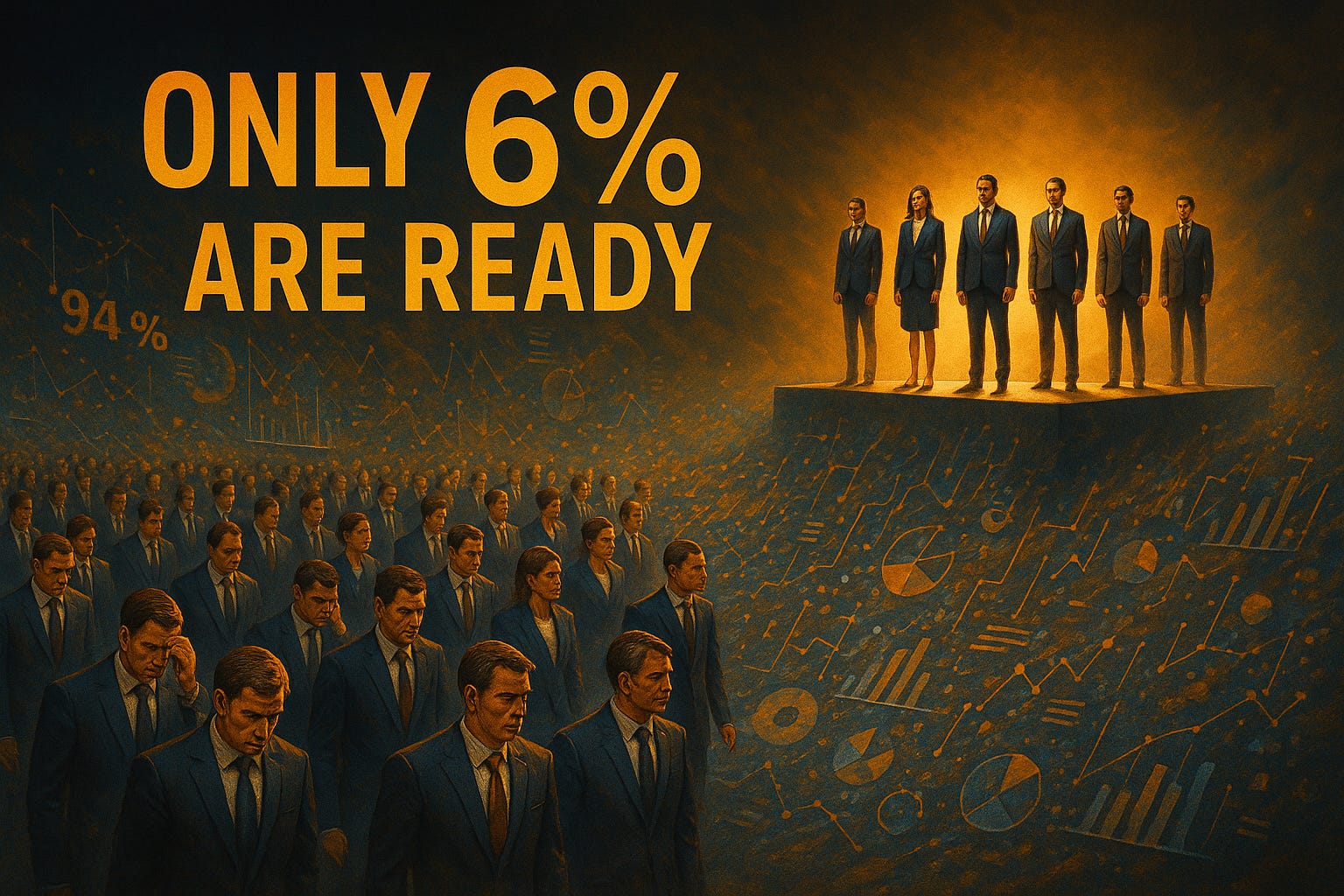
Only 6% of leaders feel “very prepared” for the pace of change.
Let that land.
This isn't an opinion or a passing trend. It's data – hard, recent, and global. Which means 94% of executives across sectors, continents, and company sizes don’t believe they’re keeping up.
Why does this matter?
Because change is no longer linear or manageable. It's compounding. And most leadership teams are still using outdated maps for a world that’s constantly redrawing itself.
As shared by Dr. Nadya Zhexembayeva – my Reinvention mentor and one of the foremost thinkers on organisational agility – this crisis of preparedness comes down to three brutal truths:
Change is compounding, not just accelerating.
We’re not dealing with one disruption at a time anymore. We’re navigating a stack: AI, inflation, supply chain upheaval, climate adaptation, and a radically different employee mindset.
Legacy strategy frameworks are too slow.
Annual planning cycles, predictive models, and static playbooks were designed for a calmer world. They’re no match for today’s speed or volatility.
Most leaders were never trained for this.
Business schools, executive retreats, and traditional leadership models didn’t equip us for perpetual reinvention. Yet this is exactly the world we now lead in.
If you're feeling off-balance, you're in good company. But waiting it out is not a strategy.
The new competitive advantage isn’t foresight – it’s fluidity. It’s the ability to adapt faster than the market moves.
That’s where the discipline of Reinvention comes in.
As a certified Reinvention Practitioner, I’ve seen first-hand what happens when leaders shift from control to capability – from prediction to readiness.
Reinvention isn’t fluffy. It’s a rigorous, trainable approach to leading in a volatile world. It equips individuals and teams to:
✅ Stay fluid without falling apart
✅ Build momentum through uncertainty
✅ Lead with clarity, not reactivity
And when integrated into team coaching, it becomes exponential – shifting entire departments or organisations from stuck to adaptive.
If you suspect your team is stuck in static thinking – if your strategic plans feel outdated the moment they’re finalised – it may be time to make Reinvention part of your leadership development.
Let’s have a conversation.
Whether it’s team-wide readiness, leadership reinvention, or a strategy reset, I’ll help you create the conditions for your team to adapt faster and smarter.
📩 Send me a message or book an exploratory call.
Because in a world of constant disruption, Reinvention isn’t a luxury. It’s leadership.

Richard Blake sat in his parked car outside the office, engine still running. The windshield wipers dragged slowly across the glass, fighting a losing battle against the icy winter rain.
He could’ve been inside ten minutes ago.
The board pack was printed. His shirt was crisp, his jacket open — dressed not just for the meeting, but for the expectations that came with it.
Everything looked fine on the surface.
And yet… something in him resisted. Not out of fear or fatigue, but something subtler — a knowing. As if stepping inside without pause would mean pretending he hadn’t noticed. That would be easier, maybe. But it wouldn’t be honest.
It wasn’t fear, exactly. Richard wasn’t prone to dramatic panic. He was 45, after all — not a kid, and not new to this game. He’d built ThriveWorks Solutions from a laptop in his spare bedroom to a company of nearly 40 people. Solid revenue. Loyal clients. An industry reputation that still meant something.
But lately, something had shifted.
The momentum was … sluggish.
The energy in the team — off.
And in the quiet moments between meetings, a question had started to take root:
“We’re doing fine… but for how long?”
It had started six months ago with a senior resignation. One of his earliest hires — someone who used to bring new ideas to breakfast meetings — handed in their notice with nothing but a polite smile and a vague mention of “needing something else.”
At first, Richard brushed it off.
People move on. It happens.
But then came the cultural survey — nothing drastic, but a noticeable drop in engagement. More people “coasting.” Fewer ideas. The metrics said fine. But the heartbeat? Off rhythm.
And the truth he didn’t want to admit — not even to his wife, Marisa — was that he wasn’t sure what to do next. The strategies that once worked no longer felt sharp. The meetings were happening, but the traction was gone.
It wasn’t crisis.
That might’ve been easier to solve.
This was something worse: quiet stagnation.
The previous afternoon, Richard had clicked on a PwC article a colleague had shared. The headline grabbed him immediately:
“Almost half (45%) of CEOs say they do not believe their current business will be viable in a decade if it continues on its current path.”
Up from 39% the year before.
He read it twice.
“If it continues on its current path…”
That was the part that stuck. Because ThriveWorks was very much on its current path. And it wasn’t a bad one. But it also wasn’t an evolving one.
And that’s what worried him.
Richard wasn’t short on ideas.
He’d spent hours thinking about strategy shifts, new hires, and better ways to structure the next offsite.
But if he was honest, he’d been tinkering around the edges.
Trying to fix disconnection with another playbook.
Trying to spark alignment without really confronting the drift.
And part of the reason?
He was in it too deep.
He wasn’t just leading the business — he was embedded in the habits, the rhythms, the very culture that now felt misaligned. And you can’t read the label from inside the jar.
It wasn’t about capability.
It was about perspective.
What he needed — and what he was finally open to — was an outside voice.
Not to take over.
Not to consult from a distance.
But to come alongside the team and help them see themselves clearly again.
Because what was breaking wasn’t the business model.
It was the team’s ability to talk honestly.
To align fully.
To reconnect to something deeper than KPIs.
Richard realised something critical:
He couldn’t drive that from his seat.
He was the founder, the MD, the decision-maker.
And in this season, that made him part of the stuckness — not the solution.
He needed someone who could:
Hold up a mirror without judgment
Create space for voices that had gone quiet
Help the team revisit purpose and patterns with fresh eyes
Rebuild trust and traction — not through pep talks, but through process
This wasn’t about crisis management.
It was about future-proofing a team that had lost its internal compass.
And Richard knew: if they didn’t do that work now, “fine” would soon become fragile.
What Richard was sensing — and what many leaders ignore until it’s too late — is that teams don’t break with a bang.
They fade.
They drift.
They stop asking bold questions.
They get busy, but not brave.
And while the numbers might stay green for a while, the rot sets in underneath — in the culture, in the conversations, in the clarity that once made them dangerous in the best way.
Team coaching isn’t about tuning up what’s already working.
It’s about reawakening and reinventing what’s been dulled by routine.
It’s about restoring shared language, mutual accountability, and deep ownership of the future.
And yes — it’s also about the leader being willing to say:
“I can’t steer this ship alone anymore — not if we want to go somewhere new.”
The rain was still falling when Richard finally stepped out of the car.
He walked slowly, hands in pockets, thoughts still circling.
His team wasn’t failing.
But they weren’t stretching either.
And he couldn’t shake the question:
“If things stay as they are… are we still relevant in five years?”
That question might be uncomfortable.
But it’s also a gift.
Because it pushes leaders out of autopilot and back into alignment.
And for Richard — and the nearly half of CEOs who quietly share his doubt — that’s where the real work begins.
Is your team still aligned for the future you’re building?
If Richard’s story feels uncomfortably familiar, it might be time to start a different kind of conversation.
Feel free to reply or reach out — I work with leadership teams who want to grow without losing what matters most.

Consistency & fairness
Policies, roles and standards ensure equitable treatment—crucial in large or regulated organisations. A meta-analysis of 80 quantitative studies (648 effect sizes) concluded that representative bureaucracy generally improves organisational performance, particularly when frontline staff mirror the communities they serve (Andrews et al., 2005).
Risk control and compliance
In sectors like finance, healthcare or manufacturing, robust procedures protect people and organisations, ensuring safety and compliance—reducing legal, ethical or reputational risk.
Scalability and clarity
As organisations grow, bureaucracy provides structure: delineated responsibilities, repeatable processes, clear escalation. Team coaching can leverage this as a platform for empowerment, not constraint.
Productivity drainage
Harvard Business Review and other sources estimate that excess bureaucracy in the US economy costs around $3 trillion annually—nearly 17% of GDP (Gary Hamel, HBR, 2016).
Time wasted in red tape
A study from Germany’s Ifo Institute reports that office workers spend over 20% of work hours on bureaucratic tasks, costing firms approximately €146 billion/year, or 3.5% of GDP (Ifo Institute, 2023).
Demotivation and burnout
A recent psychological study found that high perceived bureaucracy significantly reduces employee motivation, satisfaction, and performance (Rosenblatt et al., 2020).
Innovation stagnation
Overly rigid systems strangle creativity: teams become risk-averse, compliance-over-courage orientated, and slow to respond. Process replaces purpose when it goes unchallenged.
While these figures pre-date the pandemic, post-COVID research paints a mixed picture. Some agile organisations streamlined and empowered frontline teams, reducing red tape to survive. Others, particularly in traditional sectors, experienced what McKinsey called a "bureaucracy rebound"—a return to rigid systems once the urgency of crisis faded. The lesson? Bureaucracy is always evolving—and requires intentional leadership to keep it healthy.
In team coaching, real restoration starts small. Before sweeping reforms, we begin by mapping a team’s "bureau code"—the processes that guide (or hinder) their daily rhythm. Often, this reveals outdated habits or unnecessary obstacles that quietly dilute effectiveness.
Coaching then brings leadership into focus. We support senior leaders in balancing structure and agility—avoiding the traps of micromanagement or disengagement. With clarity and courage, leaders can prevent bureaucracy from spiralling into control.
At the frontline, trust matters most. When teams closest to the work have the freedom to act, energy and insight return. Team coaching empowers this discretion, helping people engage with systems wisely, not rigidly.
Rather than overhauls, we encourage "micro-liberations": quicker decisions, fewer hoops, clearer roles. Bit by bit, these shifts rebuild momentum.
And when compliance gives way to purpose—when people are trusted and reconnected to the ‘why’—bureaucracy becomes a frame, not a cage.
At its best, bureaucracy reflects a deeper yearning in human systems: the desire for order that protects dignity, not power that controls. Many traditions remind us that structure, when rooted in compassion and justice, exists to serve people—not the other way around. This same spirit underpins great team coaching—restoring alignment between structure and soul, systems and stewardship.
Bureaucracy isn’t inherently broken. At its best, it provides the scaffolding that allows people to work with clarity, consistency and safety. But left unchecked, it can swell into something that stifles rather than supports—where rules replace reasoning and process overshadows purpose.
Team coaching meets this moment by helping organisations realign systems with soul. It reminds leaders that structure must always serve something greater: the people and purpose it was built to protect.
If your team feels stuck in process or paralysed by policy, it may not be a motivation problem—it may be a signal that bureaucracy has outgrown its role. The invitation is not to tear it down, but to restore it.
In your context, is bureaucracy currently
🟢 Supportive of your ability to lead and deliver, or
🔴 Detracting from agility and energy?
Share your experience or vote below—let’s build collective wisdom.
Has bureaucracy in your organisation become a foundation or a barrier to leadership and performance?
👉 After reading, ask yourself:
Does our bureaucracy support or sap team energy?
Are we using it to protect or to hide weak leadership?
Let me know if you'd like a full session plan for senior teams to map, de-risk and re-enable bureaucracy—reinforcing Strong Minds, Strong Teams.
🔑 “I used to think our team was peaceful, but now I realise we were just avoiding the hard conversations.”
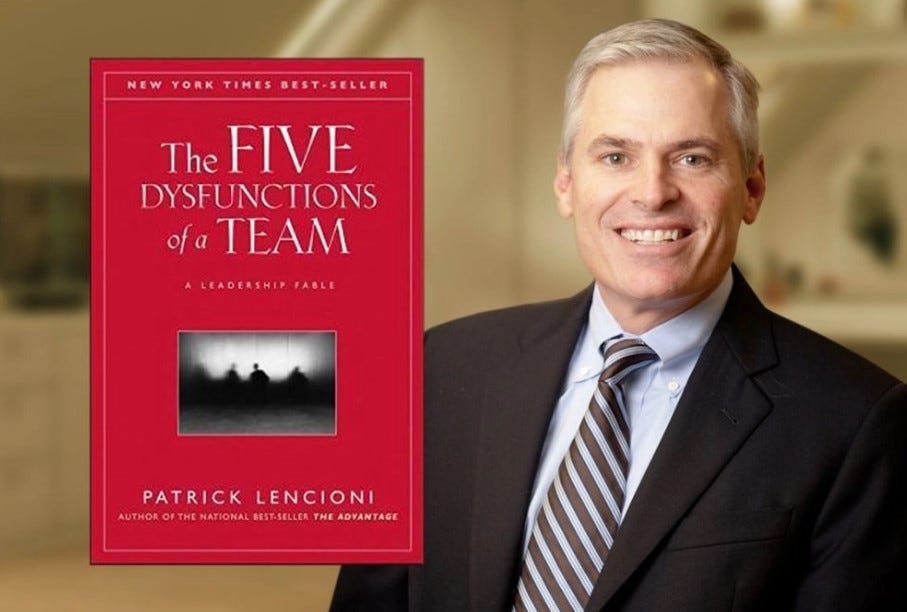
Fear of conflict within teams manifests as a culture of avoidance. Teams reluctant to engage in tough conversations fail to address critical challenges, leading to subpar decisions and missed opportunities. Patrick Lencioni, in The Five Dysfunctions of a Team, emphasises that fear of conflict arises from a lack of trust. Without trust, team members avoid vulnerability, which is essential for candid dialogue and innovation.
👉 Signs Your Team Might Be Avoiding Conflict:
• Reluctance to engage in debates.
• Avoidance of controversial topics.
• Superficial agreement that feels “too easy.”
• Lack of accountability or challenge.
🤔 Ask yourself: "Is my team avoiding discomfort at the expense of growth?"
Teams that fear conflict often appear harmonious but are silently sabotaging themselves. Meetings become superficial, team members disengage, and the organisation's goals suffer.
💡 Here’s How Leaders Can Break the Cycle:
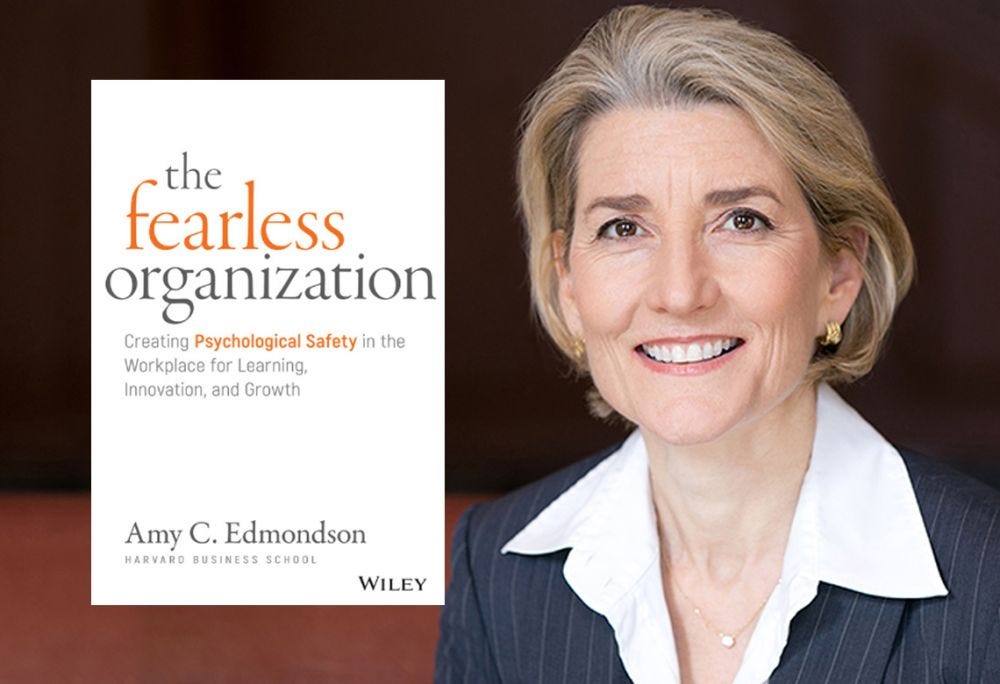
1 Build Trust: Create a space where team members feel safe to disagree. (The Fearless Organization by Amy Edmondson is a great resource!)
2 Model Healthy Conflict: Show how to challenge ideas respectfully and focus on shared goals.
3 Encourage Debate: Ask questions like:
“What are we missing?”
“Does anyone see it differently?”
“What’s the risk of this approach?”
4 Call in a Team Coach: Coaches bring fresh perspectives, mediate tough conversations, and guide teams to overcome avoidance.
🏆 The Gains of Healthy Conflict
✔ Better decisions through diverse perspectives.
✔ Increased innovation as ideas are refined.
✔ Stronger cohesion as differences are navigated respectfully.
Lencioni puts it succinctly: “Conflict is not a problem. It’s the solution.”
If you see elements of this struggle in your team, it’s probably time to lead the change. By fostering a culture of trust, encouraging debate and modelling healthy conflict, you can unlock your team’s full potential. Sometimes, the most effective first step is reaching out for support. Let’s start a conversation about how to restore collaboration and performance in your team.
Share your thoughts or experiences in the comments—your story could inspire others

.

📢 "The single biggest problem in communication is the illusion it has taken place." – George Bernard Shaw
I often hear leaders lament how their teams don’t listen, fail to act as expected, or struggle to stay aligned. George Bernard Shaw’s words couldn’t ring more true - especially when it comes to delegation.
Delegation isn’t just about assigning tasks; it’s about ensuring alignment, clarity and execution.
❌ When delegation goes wrong:
👉 Leaders may provide vague instructions, skip essential context, or fail to follow up.
👉 Teams might misunderstand, lack the necessary skills, or hesitate to seek clarity.
✅ How to improve:
✨ Leaders: Be crystal clear, provide context, and equip your team with the tools they need to succeed.
✨ Teams: Ask questions, align on goals, and foster collaboration.
In the past, face-to-face communication allowed non-verbal cues—tone, body language, and inflection - to bridge gaps in understanding. Today, much of our communication has shifted to emails and messaging platforms, where those subtle signals are lost.
As intentional leaders, we must acknowledge this gap and actively work to fill it with better communication practices, thoughtful follow-ups, and deliberate efforts to ensure alignment.
Delegation without communication isn’t just ineffective—it’s frustrating. Let’s rebuild the bridges between intention and execution and turn tasks into triumphs. 💪
-- Team Restoration Catalyst --