
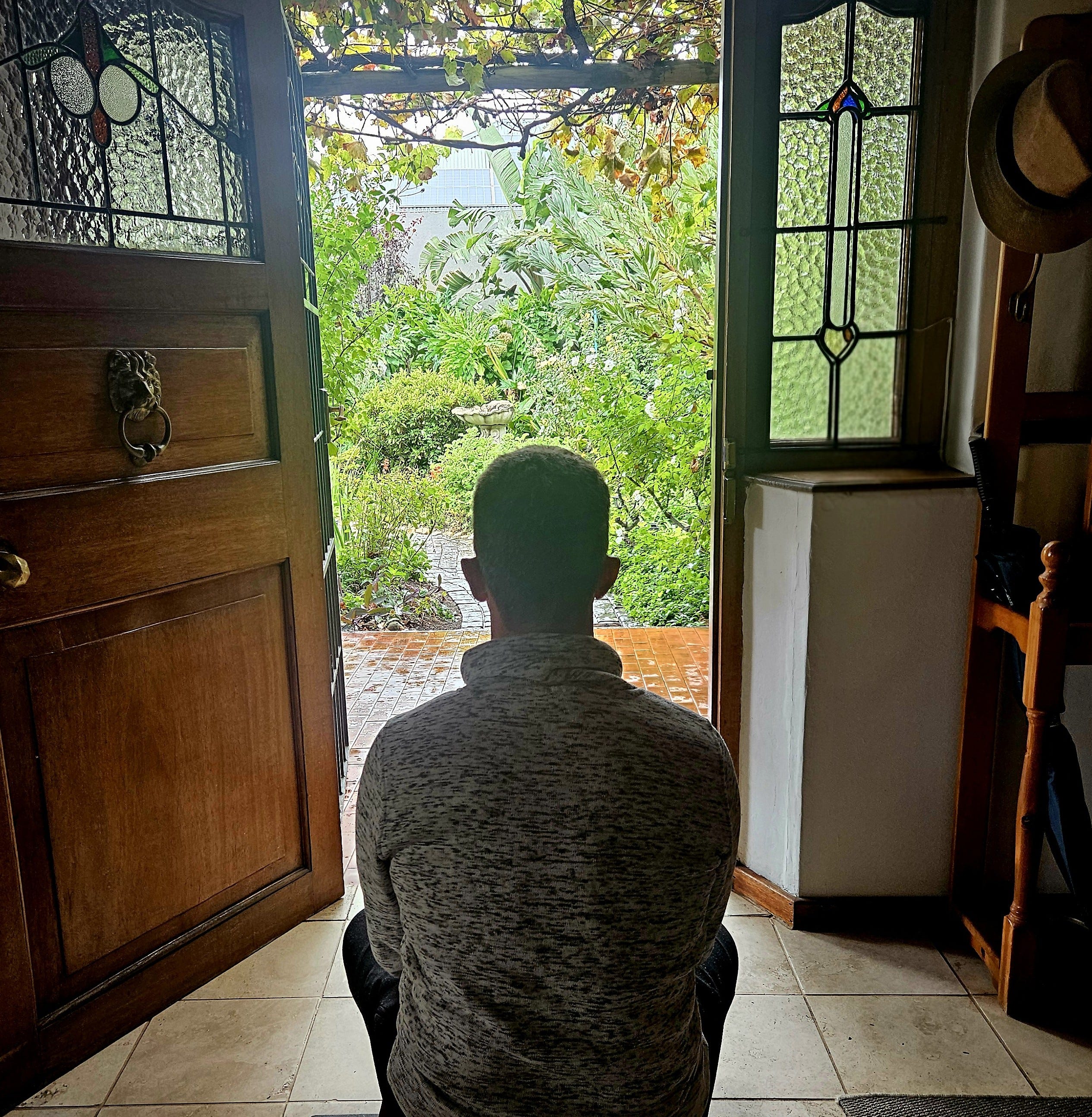
This insight was sparked in a conversation with Johann de Meyer of Pivot Coaching, drawing on work explored through Graham Codrington’s Tour Guide to the Future. It surfaced something deeply uncomfortable - particularly in the context of self-care for men and leadership development:
Many high-performing men don’t neglect themselves because they don’t care.
They neglect themselves because they believe that is what caring looks like.
I saw it in my own life.
This is a simple example, but I remember choosing not to go to the dentist so my kids could. It felt responsible. That decision quietly became a pattern. Years later, even when I could go, I didn’t. It had become part of my created identity.
A good man provides.
A good man sacrifices.
A good man puts his family first.
That belief shaped my leadership, my fatherhood, and my sense of worth.
And I thought I was practising self-care.
I exercised. I stayed fit. I performed physically. But what I called self-care was really performance. It was about strength, output, and resilience—not reflection, emotional awareness, or inner work.
The rest of me went unattended.
Slowly—almost imperceptibly at first—the cost began to show.
I was there, but not present.
Driven, but volatile.
Successful at work, but emotionally unavailable at home.
My frustration became part of the environment my family lived in. My words could cut. And when the pressure built, I would numb rather than process—using alcohol to take the edge off rather than facing what was underneath.
This wasn’t a crisis. It was a drift.
A gradual, justified, socially reinforced pattern.
What futurist Graham Codrington might describe as a “grey elephant”—something visible, predictable, and impactful… yet ignored.
An internal one.
Research and commentary, including insights from Psychology Today, highlight how this pattern of self-neglect in men often transfers emotional and physical burden onto their partners and families. What looks like strength externally can quietly become strain internally.
The moment that broke through wasn’t explosive. It was quiet.
I was in an argument with my (then) teenage son. I was frustrated, reactive. He looked at me—not with defiance, not with arrogance, not trying to assert power—but with a calm, mature, insightful, and innocently honest presence and said:
“Dad… you do you.”
There was no ego in it. No agenda. Just truth.
And in that moment, I saw myself.
And I didn’t like who I was.
It was also the moment I began to recognise a deeper incongruence—not just between my behaviour and my values, but between the life I was living and the life I believed I was called to live.
As my faith began to take root, I could no longer ignore it. It was after all a universal truth treat others as you would treat yourself.
I had been protecting something.
A fear I hadn’t named:
If I don’t provide, I am worthless.
And if I am worthless, I will be rejected.
Even though deep within my being, my soul, I knew this was a lie, I still gave it power over me. So I performed. I provided. I pushed.
But in doing so, I was slowly becoming harder to live with.
The real risk?
I was beginning to recreate patterns I had experienced growing up—patterns I had sworn I would never pass on.
Leadership research, including Brené Brown’s *Dare to Lead*, reinforces that self-awareness, emotional courage, and vulnerability are not optional extras—they are foundational to effective leadership and healthy relationships.
This is something I now see consistently in my work in executive coaching and leadership development and it is understandable given what our modern world seems to value most.
We live in a system that measures everything:
- productivity
- output
- performance
- financial success
And we do what we are measured by.
But the most important aspects of leadership, parenting, and relationships cannot be measured:
Presence.
Connection.
Emotional safety.
Trust.
As artificial intelligence and automation take over what can be measured, the uniquely human qualities we neglect become more valuable—not less.
If our identity remains tied to production…
what happens when the world no longer needs us to produce in the same way?
We are left not just with burnout—but with a crisis of identity, meaning, and purpose.
This is not about self-care as indulgence.
This is about self-care for men as responsibility, self-stewardship - the foundation of sustainable leadership, healthy families, and meaningful lives.
Because if you don’t take responsibility for yourself:
- your stress becomes your family’s environment
- your absence becomes their experience
- your patterns become their blueprint
And sometimes, without realising it, you pass on the very things you once said you never would.
What I’ve come to understand—through reflection, faith, and years of working with leaders—is this:
Real care is not just provision.
Real care is presence. And presence begins with self-awareness.
It is recognising that your wellbeing is not separate from your family’s wellbeing—it is part of it.
And here’s the truth I had to face:
My family loved me for who I was—not what I provided.
They had been showing me that all along.
I just couldn’t see it.
You think you’re caring for your family…
but in reality, you’re following a lie about what makes you valuable—and it’s taking you away from them.
This is the work of real self-care for men—and it may be the most important leadership work you ever do.
If this resonates, you’re not alone.
This is the work we do with leaders and teams at Aruka Solutions—helping high-performing individuals reconnect with themselves so they can lead, live, and relate more effectively.
If you’re ready to explore what this could look like for you, let’s start a conversation.

I’ve been wondering about something.
Many successful career men say they’re tired.
Tired of the hours.
Tired of the politics.
Tired of carrying the weight of performance.
Tired of living inside a machine that never seems satisfied.
And increasingly, I hear the same quiet phrase:
“I just want to live more … intentionally”
But I’m starting to question whether success is really the thing we struggle to leave.
Success might be financial capital.
It might be social capital.
Often, it is both.
Financial capital gives us options.
Social capital gives us recognition.
One provides comfort.
The other quietly shapes how we are seen — and how we see ourselves.
Material success often confers social standing.
But if we’re honest, which one feels harder to lose?
Because success and status are not the same.
Success can be defined personally.
Status is assigned socially.
And somewhere along the way, many of us allow our identity to lean on both.
Not deliberately.
Not consciously.
But gradually.
Achievement becomes affirmation.
Title becomes explanation.
Provision becomes proof.
And before we realise it, stepping away from success doesn’t just threaten income.
It threatens who we have come to believe we are —
and the version of us the world has learned to recognise.
That is where status quietly tightens its grip.
There was a season in my own life when stepping away from a visible form of success felt courageous.
It looked bold from the outside. Principled. Intentional.
But I began to notice something uncomfortable.
The real tension wasn’t only financial.
It was relational.
It wasn’t about what I earned.
It was about what the shift might say, if it did not meet ‘their’ definition of success.
Would people assume I’d failed?
Would they think I’d been naïve?
Would the old way of measuring success quietly feel vindicated?
I realised I wasn’t only detaching from income.
I was detaching from the version of myself the world recognised.
And that felt far more exposing.
The word authenticity rolls comfortably off the tongue.
We encourage men to align with purpose.
To live from conviction.
To step off the treadmill if it no longer fits.
But authenticity carries a cost few of us articulate.
It changes how you are introduced.
It alters the story others tell about you.
It removes the visible markers that once explained your “value”.
And I sometimes wonder:
Do we want authenticity?
Or do we want a version of authenticity that eventually becomes another form of status?
A different headline.
A different kind of admiration.
A more noble applause.
That’s a quieter question that requires time with self.
Perhaps the real hesitation many men feel isn’t about money.
Perhaps it’s about visibility.
About what happens when your peers no longer nod in recognition.
About what happens when your path cannot be easily explained at a dinner table.
About what happens when the metrics flatten before they rise.
I don’t write this from a place of certainty.
I write it from inside the very same tension.
From noticing how quickly old measurements reappear when pressure rises.
From recognising that leaving success is sometimes easier than releasing status.
And from asking myself — repeatedly:
If no one validates the shift,
if the numbers don’t immediately reward it,
if the world doesn’t confirm it,
would I still choose it?
Our individual definition of success can change without threatening our identity.
Status often cannot.
I’m not sure the question is easy.
But I am convinced it is answerable.
The tension does not have to own you.
There is a choice in it.
… what is yours?.
#Leadership #Success #Authenticity #ExecutiveLeadership #PurposeDriven
📷 StockCake

Focus is widely praised.
It is seen as discipline. As maturity. As revered skill.
For many, focus has been the means by which life has been built — careers established, families provided for, responsibilities carried.
Focus gets results.
Focus gets you here.
And yet, for some, there comes a quiet, confusing moment where a question surfaces — not loudly, not dramatically — but persistently:
I did this. I chose this. Why does it still feel incomplete?
Not regret.
Not failure.
Just a dull sense of deflation that doesn’t quite make sense.
Focus at its best
Let’s be clear: focus is not the problem.
For many men, focus has been an expression of faithfulness — staying the course, honouring commitments, carrying what needs to be carried. It is often how responsibility and obedience have been lived out.
Focus narrows attention so progress is made.
It cuts through distraction.
It produces outcomes.
Used well, focus is a sharp tool.
But every strength, when stretched too far, begins to change its nature.
Hyper or narrow focus does something subtle. It heightens attention on what matters most — and quietly reduces awareness of everything else.
Not suddenly.
Not dramatically.
Gradually.
Relationships don’t end — they thin.
Faith doesn’t disappear — it becomes functional.
Feeling doesn’t stop — it dulls.
Life may still be working.
Yet something feels muted.
This isn’t about excess or indulgence.
For some men, it’s single-mindedness — a good goal held faithfully, without pause or reflection.
Over time, focus can shift from being something you use to something you are.
“I’m the provider.”
“I’m the dependable one.”
“I carry this.”
When focus becomes identity, questioning it feels risky. Even disloyal. After all, this focus is what got you here.
So you keep going.
Eventually, another question begins to form — softer, but more searching:
If this continues for another ten years… will it matter?
Not will it succeed?
Not will it survive?
Just — will it matter?
What will be strengthened?
What may have quietly faded?
This isn’t a crisis.
It’s a moment of noticing.
A broader perspective
This is not a call to abandon focus.
It’s an invitation to widen it.
To include not only outcomes, but inner life.
Not only provision, but presence.
Not only discipline, but awareness.
Not instead of responsibility — but alongside it.
The question is not whether focus has served you.
It likely has.
The question is whether it is still serving what matters most.
Focus is a gift.
But one of life’s quiet oxymorons is this:
Has your focus become a blunt instrument?
And might broadening it actually restore its sharpness?
And sometimes the beginning of restoration is not doing more —
but noticing what has quietly slipped out of view while you were doing what needed to be done.
📷 Stockcake

I watched a film recently — Jay Kelly, now on Netflix.
I won’t tell the story.
That’s not the point.
What stayed with me was how closely it echoed the conversations I’m having with men in midlife right now — particularly men who, by most external measures, are doing well.
Capable men.
Responsible men.
Men who have carried expectation, leadership, and provision for a long time.
And who, beneath it all, feel quietly tired.
- - - - -
In my work, men rarely arrive saying something is wrong.
They arrive carrying a weight they can’t quite name.
They’re not in crisis.
They’re not failing.
They’re functioning.
Often it’s only as the conversation slows that deeper things begin to surface — a sense of distance, a loss of aliveness, a quiet wondering about how life came to feel this narrow.
Not dramatic questions.
Just honest ones.
- - - - -
What this film reflects so closely isn’t fame or success.
It’s distance.
Distance that often emerges because of success — not in spite of it.
As responsibility grows, so does focus.
A single-mindedness about a goal worth pursuing.
A clear sense of what needs to be done — and the determination to do it well.
Much of this is good.
Focus builds careers.
Provides for families.
Creates momentum.
But when focus narrows for too long, it can begin to consume.
Life reorganises itself around the goal.
Everything else becomes secondary — postponed, delegated, managed around the edges.
In time, structures are built to support that focus.
Systems that remove friction.
Conveniences that keep things running smoothly.
And gradually, almost without noticing, those same structures begin to insulate.
Convenience becomes separation.
Support becomes distance.
Lives are shaped to feel smooth —
until something essential begins to feel far away.
- - - - -
If you do watch Jay Kelly, different things may begin to surface.
It might be something in Jay himself — a feeling, a tension, a moment of recognition.
Or it may be one of the other characters who stays with you longer than expected.
A relationship.
A dynamic.
A role someone is playing.
You may notice resonance, irritation, or quiet resistance — not always with immediate clarity.
Sometimes what catches our attention isn’t about who we are, but who we are alongside.
Or who we feel responsible for.
Or who we sense may be drifting, even while appearing outwardly successful.
Rather than interpreting any of this too quickly, there can be value in simply pausing and noticing what emerges — and what it might be reflecting about your own life, or the lives you’re closely connected to.
- - - - -
Some stories don’t arrive with answers.
They simply create space.
And sometimes, that space is enough to begin noticing what has slowly moved out of view.
If this reflection resonates, you’re welcome to reach out.
These are the conversations many men sense they need — long before they know how to begin them.
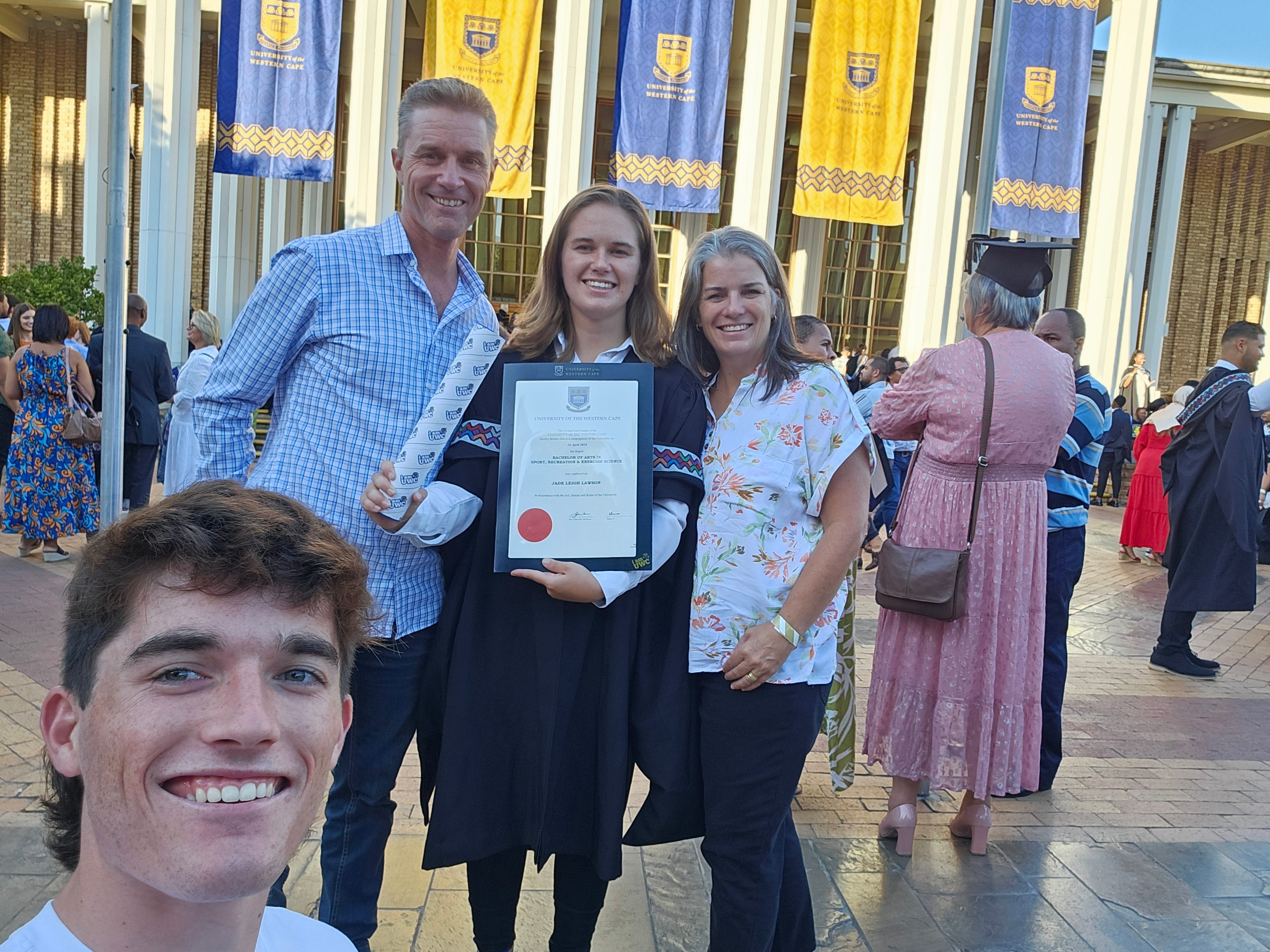
There are moments in a parent’s life when emotion refuses to stay neat and categorised.
This past month has been one of them.
Both our children have boarded — or are boarding — planes for overseas careers. Not gap-year adventures, but real, adult steps into their own futures. And as we watch them go, I realise just how unprepared I am for what it feels like when the door closes behind them and the house falls quiet.
Empty nesting is a strange paradox — a sweet victory wrapped in a bitter ache.
The Bitter
The bitterness is not about regret alone.
It’s about finality.
For the first time in 23 years, Christmas will be just the two of us.
No excited voices.
No last-minute gift-wrapping chaos.
No noise.
The worldly, family-centred rhythm of Christmas — which, for us, has mostly orbited around our kids — will sound very different this year.
There’s also the deep vulnerability of letting go.
They are far away.
We cannot step in if things go wrong.
We cannot cushion the fall or read their fatigue or see the worry in their eyes.
All we can do is entrust them to God — something we’ve always done, but which suddenly feels more real than ever. In past years my mind could pretend to “wrestle the steering wheel back.”
Now? I simply can’t.
I will be a distant observer, not an active fixer.
That truth stings.
And there’s guilt — the quiet kind that surfaces when a chapter closes.
The things I didn’t get right.
The moments I’d love to redo.
The habits I wish I’d modelled better.
And the ways I hope they will choose differently when they one day raise their own children.
The Sweet
But there is sweetness too — an unmistakable one.
This is exactly what we prayed for: that our children would grow into independent, courageous adults who follow their dreams wherever those dreams take them. That they would not be held back by fear or smallness. That they would take up space in the world as whole, capable, resilient young people.
And here they are… doing exactly that.
They are standing on their own feet.
They are navigating foreign cities.
They are making choices, building networks, shaping careers.
Everything we’ve poured into them — every value, every conversation, every boundary, every prayer — is now being tested not in theory, but in life.
It is beautiful.
And it is hard.
But beauty and difficulty often travel together.
The Space Between Who We Were and Who We Are Becoming
In recent years I spoke with excitement about “getting my wife back” when the kids eventually left home. I imagined renewed spontaneity, rediscovered simplicity, long dinners without interruption.
But now that the moment has arrived, a different feeling surfaced:
Part of me wished this cup could pass from us.
Not because I don’t want the next chapter — I do.
But because closure hurts, even when it’s right.
This transition is not about lamentation.
It’s about truthfully honouring what is ending and what is beginning — death and birth sitting at the same table, not as foes but as companions.
A New Chapter of Fatherhood
My role as a father is changing.
I will no longer stand next to them physically.
I will stand with them in thought, in prayer, in spirit.
Fatherhood, I am discovering, has chapters I never imagined — chapters where proximity is replaced by trust, where presence is mostly digital, and where guidance becomes invitation rather than instruction.
I don’t know exactly what fathering adults looks like, but I’m willing to learn.
I’m open to begin this new chapter of the book.
And I believe — deeply — that they will be just fine.

Their Transition Too
And of course, our children are also walking through their own transition.
They now face the full weight and wonder of independence — the reality on the other side of all those childhood hopes and prayers. Their experiences will not look the same as mine or even each other’s; each is meeting this chapter with their own blend of excitement, uncertainty, responsibility, and possibility.
As their father, all I can do is support them in the ways they need, hold the differences in their journeys with gentleness, and trust that the foundations we’ve laid will serve them well in the weeks, months, and years ahead.
A New Chapter of Marriage
Our home is quieter now, more spacious in ways that feel both liberating and unsettling.
It’s just us —
not in the sense of loss, but in the sense of rediscovery.
This is an invitation to learn each other again.
To rebuild rhythms.
To explore who we are when parenting is no longer the organising centre of our lives.
It is daunting… and exciting.
And while this is my experience of empty nesting, I know it is not the same as my wife’s.
Her transition — though shaped by the same circumstance — carries its own emotions, its own texture, its own story. I don’t want to speak for her, nor assume our paths through this chapter will look identical.
All I want is to be present with her in it…
to support her as she navigates her own letting go, her own grief, and her own beginning.
We are in the same moment, but we are experiencing it differently — and that, too, feels sacred.
The Page That Turns and the Page That Waits
Yes — this is emotional.
Yes — there are tears.
My heart aches and leaps with joy at the same time.
But perhaps that’s the point:
When one chapter closes with such intensity, the next one rarely begins quietly.
There is gratitude woven into the grief.
There is anticipation tucked inside the sadness.
There is a blank page waiting, and I am learning to step toward it with openness rather than fear.
Empty nesting is not an ending — it’s a re-orientation.
A new chapter.
A remembering of who we are when our roles evolve.
And maybe that’s what makes it holy.
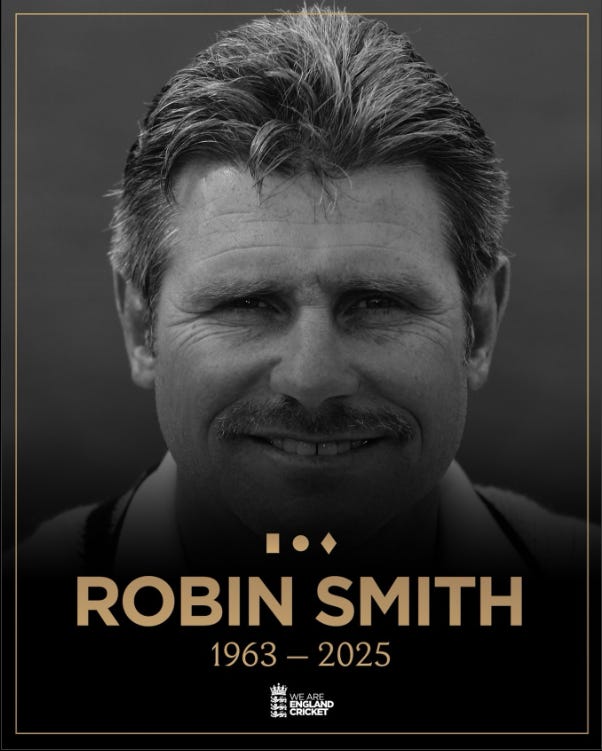
The news broke on our cricket WhatsApp group.
One message… then another… then another.
Robin Smith had passed.
The comments were full of respect and heartbreak — but as I read them, something in me cracked open. Because for me, Robin Smith wasn’t just a cricketer. As a boy, he was the hero.
I can still see him now:
Presence at the crease like very few men on earth.
Calm in chaos.
Time slowing down around him.
That fearless, almost regal way he carried the bat.
He made batting look easy — not because it was, but because he was larger than life.
I never modelled myself on him.
But I desperately wished I could.
He was everything I believed a man should be.
And yet… beneath that presence, beneath the legend… he was human.
And today, he is gone.
I sat in a coffee shop reading the messages, and tears just came. Not gentle tears — proper, uninvited, burning ones. Because this isn’t only the loss of a sporting great. It’s the loss of a man whose wisdom, story, and humanity extended far beyond the cricket field.
But it’s more than that.
It’s the same story I’ve seen far too many times.
I’ve lost three friends — all midlife men — to suicide. Good men. Decent men. Men with wives, children, colleagues, friendships. Men who were not alone… but felt like they were.
And I grieve Robin today in the same way:
Not just for the man we lost,
but for the unimaginable suffering he must have carried quietly.
Because somewhere along the line, men were sold a lie:
that suffering makes you weak.
that being human is a flaw.
that emotions are a threat to masculinity.
that “success” is measured in material comfort, status, income, or control.
But here’s the truth:
And real men — whole men — hurt.
We ache.
We get lost.
We drown under expectations.
We break under the weight of what we think we should be.
I know this because I’ve lived it.
There was a day — I remember it vividly — sitting with a board pack in front of me and staring at a bookcase in the office. Something inside me whispered:
“I am not okay.”
Not the dramatic collapse Hollywood portrays.
Just a quiet internal death.
An emptiness so sharp it finally made me admit:
The life I was living was not the life I was made for.
I was blessed — people, learning, and faith helped guide me through it.
But many men don’t get that lifeline in time.
We chase financial freedom, as if it will save us.
But what is financial freedom worth if you die trying to reach it?
Men aren’t dying because they’re weak.
They’re dying because the story is broken.
A story that tells men:
emotions are a luxury
pain should be private
contribution equals income
vulnerability equals failure
It’s nonsense.
We are human beings before we are providers.
We are relational creatures — designed for connection, for brotherhood, for meaning.
We are each unique, with gifts the world desperately needs.
And burying those gifts to conform to the world’s metrics of success is killing us.
Sometimes quietly.
Sometimes catastrophically.
So let me ask the question that matters:
Sit with that.
Let it rearrange you.
Because if the answer is anything deeper than “he had a nice car” or “he made good money,” then maybe — just maybe — the story we’ve been handed isn’t the story we were designed to live.
This generation of men can break the pattern.
But it starts with one honest conversation.
So if you’re in a tough space — truly — don’t disappear into silence.
Reach out.
To a trusted mate.
To a partner.
To someone who will hold your truth gently.
You’re not broken.
You’re not a burden.
You’re not alone.
You’re a man.
A human one.
And that is more than enough.
There’s no pressure — just conversation.
And this article is also available on the Aruka Solutions website.

Somewhere along the way, we started believing that only the broken need help.
But what if growth isn’t about being fixed — it’s about being found?
Even the most successful people reach a point where success itself stops feeling like progress.
The meetings, the goals, the targets — they all keep moving, but something inside doesn’t.
That’s usually when people find coaching.
Not because they’re failing, but because they’re ready to live and lead with deeper clarity.
It’s a common misunderstanding — that coaching is only for people who’ve lost their way.
In truth, it’s for people who are ready to move forward with clarity, authenticity, and purpose.
It’s for those who sense there’s more — not because they’re broken, but because they’re brave enough to go deeper.
Many clients arrive quietly, unsure what to expect.
They say things like, “I’m not sure what’s wrong — I just know something’s missing.”
Coaching begins right there: in that honest pause between awareness and action.
We never think twice about having a coach for our golf swing, our fitness, or our finances.
But when it comes to our mindset, our leadership, or our purpose, we hesitate — as if needing support in these areas makes us weak.
In reality, that’s where the strongest work begins.
Because coaching isn’t about correcting what’s wrong — it’s about amplifying what’s right, and expanding what’s possible.
Coaching often gets grouped with other forms of support. Each has its rightful place, and it’s worth understanding the distinction.
Counselling helps when something isn’t right. It looks at the emotional patterns, traumas, or events of the past that may be affecting the present.
Its goal is healing — bringing us back to balance and stability.
Therapy goes deeper still. It addresses diagnosed mental health challenges, using clinical or behavioural techniques — sometimes alongside prescribed medication — to restore psychological wellbeing.
It’s crucial and often life-changing, but its focus is on recovery.
Mentoring is about guidance. A mentor is someone who’s walked a path ahead of you and shares wisdom from experience — “Here’s what worked for me, and what I’d do differently.”
It’s directional, valuable, and experience-based.
Coaching begins where those paths end.
It’s not about fixing, healing, or advising — it’s about awakening.
Coaching is a partnership built around the belief that the answers already live within you.
A coach doesn’t give you the map — they help you draw your own.
They don’t tell you who to be — they help you discover who you already are, and what’s trying to emerge next.
It’s a space of curiosity, courage, and accountability.
You bring your hopes, fears, and questions; the coach brings presence, insight, and structure.
Together, you create a future that’s uniquely yours — grounded in purpose, sustained by alignment, and expressed through intentional action.
Counselling helps you make peace with your past.
Mentoring helps you learn from someone else’s path.
Coaching helps you design your own.
It’s for those who are not content to simply repeat the same year of life ten times and call it growth.
It’s for the leader who feels successful but not significant.
The professional who’s asking, “What’s next?”
The person who senses that there’s something sacred about becoming whole.
Coaching invites you to pioneer — to lead yourself first, then others, from a place of restored clarity.
There’s a quiet spiritual dimension to coaching.
It honours the idea that purpose is already planted within us — like a seed waiting for the right conditions to grow.
Through the work of reflection, truth, and action, we till the soil so that what’s been entrusted to us can flourish.
This is the essence of restoration: not fixing what’s broken, but awakening what’s possible.
If you’ve ever felt the gap between where you are and who you sense you could be — that’s the space coaching lives in.
Not to tell you who you are. Not to heal your past.
But to help you move forward with clarity, authenticity, and purpose.
Because coaching isn’t for the broken — it’s for the brave.
If you’re curious about how coaching might help you or your team move from awareness to action, I’d love to connect.
You can explore more at www.arukasolutions.co.za or reach out for a clarity conversation.
📷 = Stockcake

Richard had always believed he was a good husband. He worked hard, provided well, stayed faithful, and never missed an anniversary or other important family celebrations. In his mind, that was enough.
But over time, something quiet shifted. The ease between him and Mariska — the laughter, the shared ideas, the small gestures that once made them feel deeply connected — had thinned. Conversations became practical, affection predictable. It wasn’t that either of them had stopped loving; it was that the texture of their closeness had changed.
Through coaching, Richard began to see how he had drifted from the kind of husband he wanted to be. Not through a single choice, but through many unnoticed ones. Success had absorbed his energy, and what once flowed naturally between them now needed attention and care.
The Drift That Success Conceals
At first, Richard hardly noticed her. She was a colleague — bright, kind, attentive. Their conversations were light, harmless, professional. But as the quiet distance at home grew, he found himself looking forward to her warmth, the way she asked about his ideas, his family, even his hopes.
It wasn’t about attraction — not at first. But he would be lying if he said that, later on, there wasn’t a part of him that enjoyed the attention. He never acted on it, yet he couldn’t deny how good it felt to be seen again — not for what he could provide, but for who he was.
The pursuit of success had created distance. The distance became silence. And in that silence, there was space for another voice.
The Coaching Mirror
When Richard began coaching, he thought the conversations would focus on time management or work-life balance. Instead, they became a mirror.
His coach didn’t judge — he simply asked questions that slowed him down.
“Who are you becoming through all this success?”
“When did you last feel close to Mariska — really close?”
At first, the answers came easily. But the more he spoke, the more he realised how shallow his justifications had become. The late nights, the distraction, the distance — they weren’t signs of commitment to his business. They were symptoms of disconnection from himself.
He started to see how pride had disguised itself as provision, how exhaustion had replaced empathy, and how loneliness had quietly rewritten his idea of love. What looked like success on the outside was, in truth, a slow forgetting of what mattered most.
Coaching didn’t fix it — it revealed it. It gave him language for what his heart had been trying to say: that the man he had become was not the husband he wanted to be.
Remembering What Love Really Is
It was his coach who invited him to pause and reconnect with why he had married Mariska in the first place.
“Before all the pressure, before the business — what drew you to her?” he’d asked.
The question stayed with Richard. A few mornings later, he found himself paging through an old notebook where he’d once written lines from their wedding ceremony. He stopped at the familiar passage — words he’d heard countless times but never really lived with:
Love is patient, love is kind.
It does not envy, it does not boast, it is not proud.
It does not dishonour others, it is not self-seeking,
it is not easily angered, it keeps no record of wrongs.
Reading them now felt different. They weren’t poetic anymore — they were personal.
Patience meant slowing down long enough to listen without defending.
Kindness meant showing care when it wasn’t convenient.
Not self-seeking meant taking interest in her world again, not just his own.
Not proud meant admitting that success had made him forget humility.
Each line became a quiet instruction — not about romance, but about restoration. Through coaching, he realised that love wasn’t something to feel; it was something to practice. And in rediscovering that practice, he began to see Mariska not as the woman he was surviving life with, but as someone he was learning to love again — with presence, not performance.
Love Beyond Provision
Change didn’t arrive as a revelation; it came through small, deliberate choices. Richard started by doing one thing differently each day — not to fix his marriage, but to nurture it. He left his phone in another room when he got home. He lingered a little longer after dinner. He asked about her day and listened, really listened, without preparing an answer.
At first, it felt awkward — like learning a language he used to speak fluently but had forgotten. But slowly, something softened. Mariska began to meet him in the space he was creating. The home felt warmer. Conversation felt lighter. Even moments of silence began to feel safe again.
Richard realised that love was never meant to be measured by how much he provided, but by how present he was. Provision could sustain a household, but only presence — lived daily, practiced intentionally — could keep love alive.
Restoration
Richard often thought about how close he’d come to missing it — not through betrayal or crisis, but through distraction. The drift hadn’t been dramatic; it had been quiet, respectable, and gradual. That was what made it dangerous.
What coaching offered wasn’t advice. It was awareness — a mirror that helped him see how easily love can fade beneath the noise of achievement. It reminded him that being a husband, like being human, is a practice that never stops.
Richard’s story isn’t about repair; it’s about restoration — being restored to patience, kindness, humility, and presence. The same qualities that once drew Mariska to him are the ones that now keep them close.
If any part of his story feels familiar — if success has come at the cost of closeness — perhaps coaching could be that mirror for you too. A space to slow down, to listen to what’s gone quiet, and to begin loving as a daily practice again.
🕊️ Read more reflections at www.arukasolutions.co.za.
📷 = Stockcake

Richard sat down for his coaching session with a heavy heart.
He had been avoiding a conversation he knew he could no longer put off. One of his right-hand men – someone who had walked with him for years and was foundational to the success of the company – was slipping.
The signs were there for everyone to see. Complaints from the team. A steady reduction in output. A noticeable decline in the quality of work. And yet, in executive meetings, his colleague would deflect responsibility – blaming circumstances, systems, and even other team members for what was going wrong.
Richard’s frustration was building. The cost was becoming too high – lost time, damaged reputation, financial strain. And still, he hesitated. This wasn’t just an employee; this was a friend. How do you hold both relationship and responsibility in a single conversation?
That’s what Richard brought to coaching.
As Richard began to process the situation, his coach gently surfaced something Richard hadn’t considered. He wasn’t just carrying the facts of the issue into the conversation – he was carrying his own assumptions, prejudices, and judgments about his colleague.
“He’s lazy.”
“He’s disengaged.”
“He’s blaming everyone else.”
Richard realised that if he walked into the meeting carrying those assumptions, his words would land like stones. Correction would become condemnation.
Coaching shifted the frame. What if, before correction, Richard sought connection? What if he laid down his assumptions long enough to truly see the man in front of him – not just the problems he was causing?
This wasn’t about avoiding accountability. It was about making sure accountability was grounded in empathy, not frustration.
That shift opened space for a deeper conversation – one that reached the real root of the problem.
What unfolded in that conversation was surprising. Richard’s colleague wasn’t simply underperforming; he was carrying personal challenges that were silently eroding his ability to lead. By entering the conversation with curiosity instead of judgement, Richard created the space for his colleague to face the real issues.
It was the process – grounded in empathy, honesty, and accountability – that led to the breakthrough. His colleague owned what needed to change, and in doing so found a path that was life-giving both for him and for his team.
Performance improved, yes – but more importantly, trust was restored.
When leaders come to moments like these, the temptation is to go straight to performance. But leadership at its best remembers this:
A matter of the heart is the heart of the matter.
Assumptions can cloud our view of others.
Connection comes before correction.
People always come before performance.
For Richard, this wasn’t just a coaching exercise. It was a reminder that leadership is, at its core, relational. And when relationships are restored, performance often follows.
If you find yourself carrying the weight of a hard conversation you’ve been putting off, perhaps the question isn’t just what do I say? but how do I see?
When you see the person before the problem, you may just open the door to transformation – for them, for you, and for your team.
📩 If this resonates, I’d love to hear your story. And if you’d like support in navigating your own hard conversations, let’s talk.
📰 This article is also available on our Aruka Solutions website

Richard Blake sits at his kitchen table one evening, staring at the glow of his phone. A dozen messages flash across his business chat groups, but his mind is elsewhere. His thoughts are on Luke — his fifteen-year-old son.
Richard loves his boy deeply. Yet if he is honest, their relationship is not where he longs for it to be. The easy flow of connection that fathers and children often share feels thin. Conversations are short, sometimes strained. Moments together too often turn into reminders or corrections. Beneath the surface, Richard carries both love and regret — love for who his son is, regret for how little of that love seems to land.
It is in coaching where this wrestle comes alive. Richard’s coach invites him to slow down, to notice how he is “being” with Luke, not just what he is “doing” as a father. That single shift — from performance to presence — begins to unlock something new.
“What if your role isn’t to fix him,” the coach asks, “but to know him?”
That question stays with Richard. It echoes in the quiet moments of reflection and prayer, where he draws on his faith for guidance. He wants to grow into more of a godly father — not perfect, but present. Not always instructing, but listening. Not striving to shape Luke in his own image, but learning to see his son with fresh eyes and deeper grace.
And slowly, small practices start to grow.
Evening walks — just fifteen minutes around the estate, side by side with Max, their boxer. No agenda, only open space. Sometimes silence, sometimes banter, sometimes Max stealing the show. Always together.
Shared meals — Richard guards at least two dinners a week where phones stay aside, and every family member’s voice can be heard — including Luke’s. Around the table, laughter and story slowly begin to replace the quiet scrolling silence.
Listening first — perhaps the hardest shift. Richard notices how quick he is to lecture. Coaching helps him catch himself, breathe, and ask one more question instead.
These shifts with Luke also begin to ripple outward. The dinner table feels lighter for everyone — Emma joins in with more energy, Mariska smiles more often — and Richard realises that restoration in one relationship is gently restoring the whole family.
The change is not dramatic, but it is real. Richard is already beginning to see the fruit of these small adjustments. A spark of humour returns to their conversations. A rare hug lingers a moment longer. When Luke suggests their next walk, Richard feels a mixture of surprise and gratitude. It is a small moment, but to him it means the world.
Through coaching, Richard is discovering that the work of restoration is not about heroic gestures. It is about choosing, again and again, to show up with love, patience, and presence. And as his heart turns toward his child, he is reminded that healing often begins in these simple, intentional moments.
If Richard’s journey resonates with you — if you long for a restored relationship with those closest to you — coaching might offer the space you need. Let’s explore how.
📩 You can reach out directly for a conversation here