
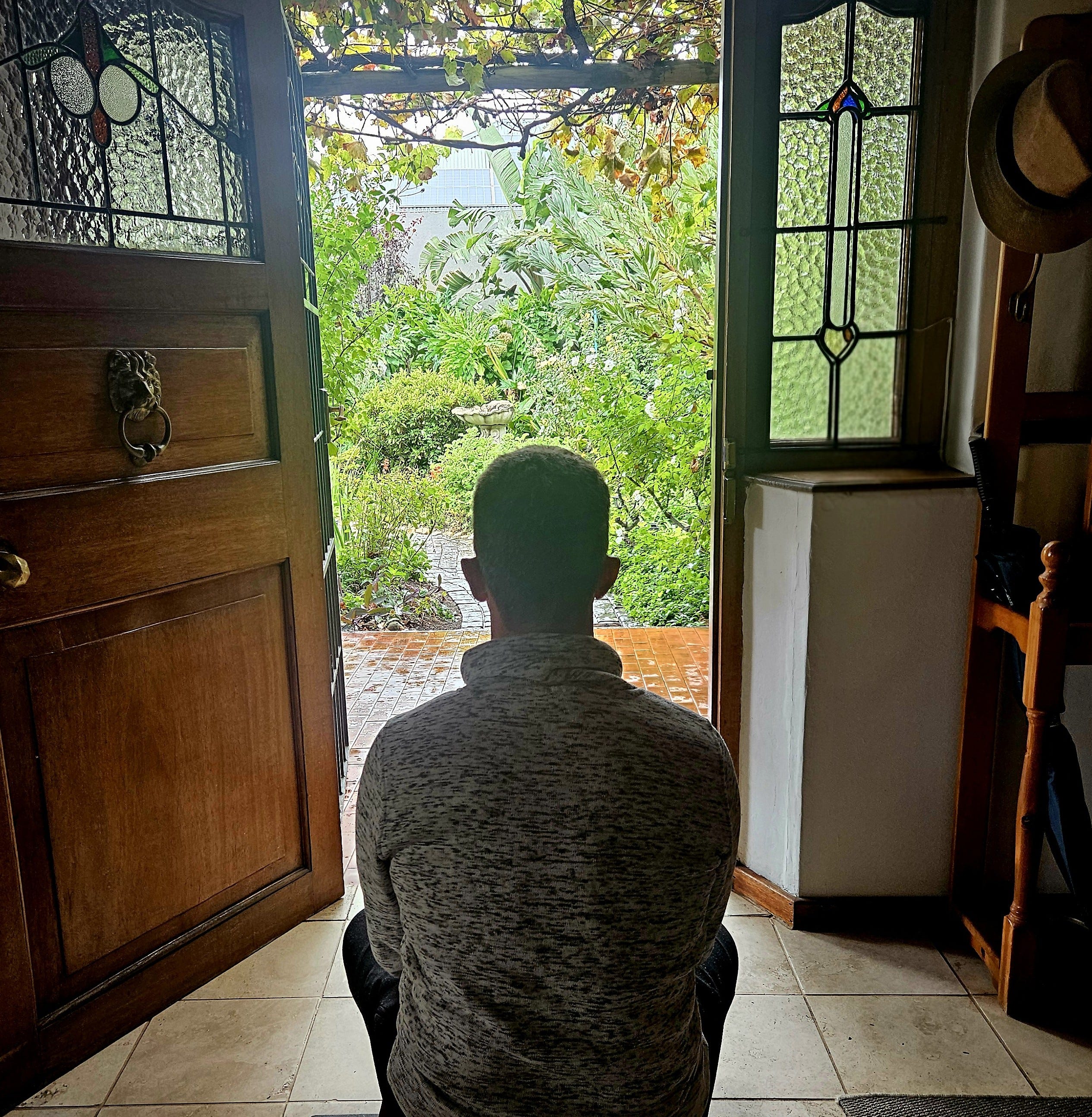
This insight was sparked in a conversation with Johann de Meyer of Pivot Coaching, drawing on work explored through Graham Codrington’s Tour Guide to the Future. It surfaced something deeply uncomfortable - particularly in the context of self-care for men and leadership development:
Many high-performing men don’t neglect themselves because they don’t care.
They neglect themselves because they believe that is what caring looks like.
I saw it in my own life.
This is a simple example, but I remember choosing not to go to the dentist so my kids could. It felt responsible. That decision quietly became a pattern. Years later, even when I could go, I didn’t. It had become part of my created identity.
A good man provides.
A good man sacrifices.
A good man puts his family first.
That belief shaped my leadership, my fatherhood, and my sense of worth.
And I thought I was practising self-care.
I exercised. I stayed fit. I performed physically. But what I called self-care was really performance. It was about strength, output, and resilience—not reflection, emotional awareness, or inner work.
The rest of me went unattended.
Slowly—almost imperceptibly at first—the cost began to show.
I was there, but not present.
Driven, but volatile.
Successful at work, but emotionally unavailable at home.
My frustration became part of the environment my family lived in. My words could cut. And when the pressure built, I would numb rather than process—using alcohol to take the edge off rather than facing what was underneath.
This wasn’t a crisis. It was a drift.
A gradual, justified, socially reinforced pattern.
What futurist Graham Codrington might describe as a “grey elephant”—something visible, predictable, and impactful… yet ignored.
An internal one.
Research and commentary, including insights from Psychology Today, highlight how this pattern of self-neglect in men often transfers emotional and physical burden onto their partners and families. What looks like strength externally can quietly become strain internally.
The moment that broke through wasn’t explosive. It was quiet.
I was in an argument with my (then) teenage son. I was frustrated, reactive. He looked at me—not with defiance, not with arrogance, not trying to assert power—but with a calm, mature, insightful, and innocently honest presence and said:
“Dad… you do you.”
There was no ego in it. No agenda. Just truth.
And in that moment, I saw myself.
And I didn’t like who I was.
It was also the moment I began to recognise a deeper incongruence—not just between my behaviour and my values, but between the life I was living and the life I believed I was called to live.
As my faith began to take root, I could no longer ignore it. It was after all a universal truth treat others as you would treat yourself.
I had been protecting something.
A fear I hadn’t named:
If I don’t provide, I am worthless.
And if I am worthless, I will be rejected.
Even though deep within my being, my soul, I knew this was a lie, I still gave it power over me. So I performed. I provided. I pushed.
But in doing so, I was slowly becoming harder to live with.
The real risk?
I was beginning to recreate patterns I had experienced growing up—patterns I had sworn I would never pass on.
Leadership research, including Brené Brown’s *Dare to Lead*, reinforces that self-awareness, emotional courage, and vulnerability are not optional extras—they are foundational to effective leadership and healthy relationships.
This is something I now see consistently in my work in executive coaching and leadership development and it is understandable given what our modern world seems to value most.
We live in a system that measures everything:
- productivity
- output
- performance
- financial success
And we do what we are measured by.
But the most important aspects of leadership, parenting, and relationships cannot be measured:
Presence.
Connection.
Emotional safety.
Trust.
As artificial intelligence and automation take over what can be measured, the uniquely human qualities we neglect become more valuable—not less.
If our identity remains tied to production…
what happens when the world no longer needs us to produce in the same way?
We are left not just with burnout—but with a crisis of identity, meaning, and purpose.
This is not about self-care as indulgence.
This is about self-care for men as responsibility, self-stewardship - the foundation of sustainable leadership, healthy families, and meaningful lives.
Because if you don’t take responsibility for yourself:
- your stress becomes your family’s environment
- your absence becomes their experience
- your patterns become their blueprint
And sometimes, without realising it, you pass on the very things you once said you never would.
What I’ve come to understand—through reflection, faith, and years of working with leaders—is this:
Real care is not just provision.
Real care is presence. And presence begins with self-awareness.
It is recognising that your wellbeing is not separate from your family’s wellbeing—it is part of it.
And here’s the truth I had to face:
My family loved me for who I was—not what I provided.
They had been showing me that all along.
I just couldn’t see it.
You think you’re caring for your family…
but in reality, you’re following a lie about what makes you valuable—and it’s taking you away from them.
This is the work of real self-care for men—and it may be the most important leadership work you ever do.
If this resonates, you’re not alone.
This is the work we do with leaders and teams at Aruka Solutions—helping high-performing individuals reconnect with themselves so they can lead, live, and relate more effectively.
If you’re ready to explore what this could look like for you, let’s start a conversation.